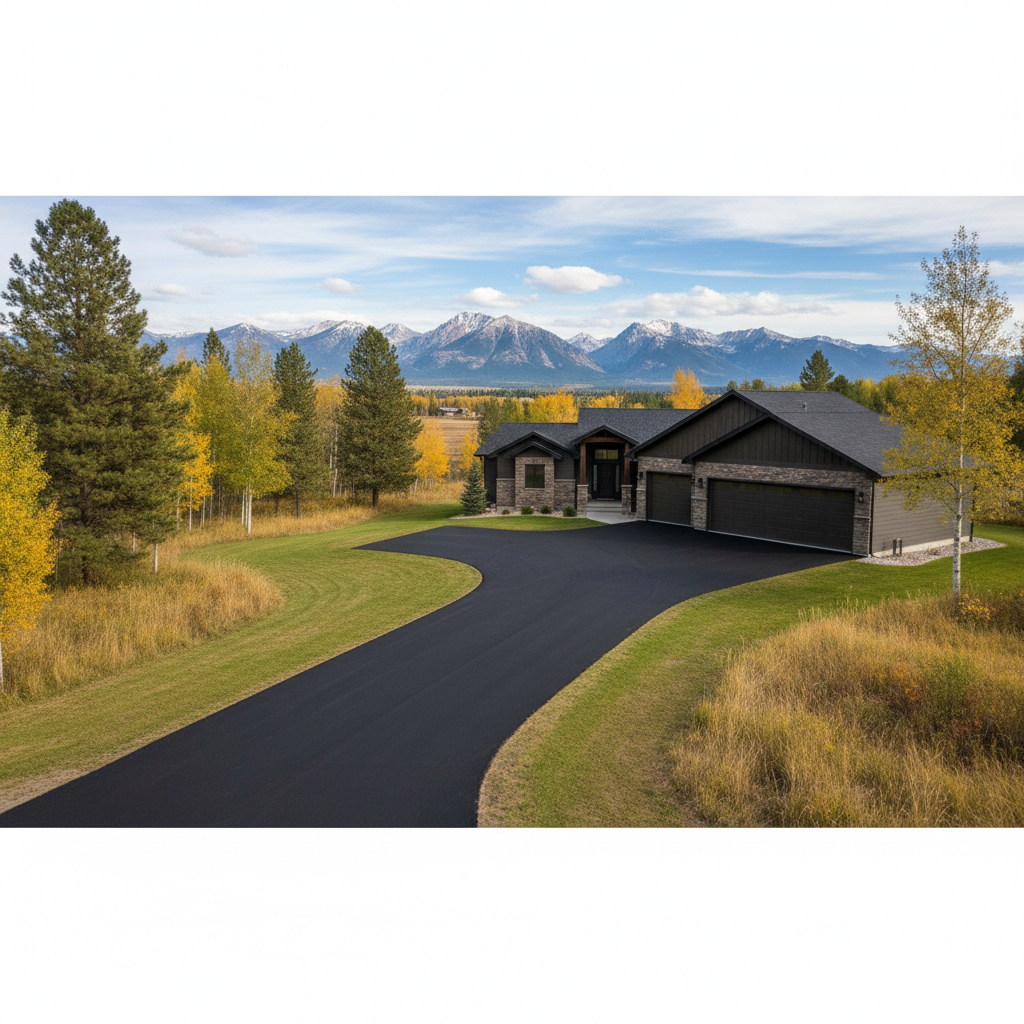
When's the best time to get that parking lot paved or sealcoated? Honestly, that's a question I hear a lot from business owners around Kalispell, and it's a really smart one. You can't just pick any old day to lay down asphalt here. Our Montana weather, especially up in the Flathead Valley, seriously impacts how long your investment will last.
Understanding Our Kalispell Seasons & Your Asphalt
Our climate isn't like, say, Phoenix. We actually have real seasons, and each one brings its own set of challenges and opportunities for asphalt work. You've got to think about the freeze-thaw cycles, those wet springs, the hot summers, and those early snows that can just sneak up on us.
For commercial asphalt, temperature and moisture are the biggest factors. Asphalt needs specific conditions to cure properly, bond together, and give you the durable surface you're paying for. If it's too cold, it won't compact right. And if it's too wet? Well, then you're looking at adhesion problems and a weaker surface down the line.
When to Schedule: The Sweet Spot
So, when's the ideal time? Generally, I tell folks to aim for late spring, summer, and early fall. That's our window. You want consistent temperatures, ideally above 50 degrees Fahrenheit, and dry conditions. That's when the asphalt mix is most workable and can achieve the best compaction. For sealcoating, you're looking for similar temperatures – maybe even a bit warmer – and definitely no rain in the forecast for at least 24-48 hours after we apply it.
- Late Spring (May-June): This can be great if we get a dry spell. The ground's thawed out, and temperatures are usually climbing steadily. You also avoid the intense summer heat, which can sometimes make the asphalt cure too fast if you're not careful.
- Summer (July-August): This is prime time. Long, warm, usually dry days. This is when we can really get in there and get the job done efficiently and effectively. The heat helps the asphalt stay pliable during installation and then cures nicely.
- Early Fall (September-Early October): Still a good window, but you've got to watch the nighttime temperatures. If it's dropping below freezing overnight, that can impact the curing process, especially for sealcoats. We're also racing against the clock before the first significant snow or a prolonged cold snap hits.
What you really want to avoid is trying to rush a job in late fall when the ground is already cooling down, or in early spring when we're still dealing with saturated ground and unpredictable frosts. Doing work in less-than-ideal conditions might save you a few bucks upfront, but it'll cost you a lot more in repairs later on. Trust me, I've seen it firsthand.
Protecting Your Investment Year-Round
Once your commercial asphalt is down, the job isn't over. You've got to protect that investment, especially with our Kalispell winters. Those heavy snowfalls, the plowing, the ice, and the constant freeze-thaw cycles can really do a number on even the best-laid asphalt.
- Good Drainage: This is huge. Make sure water isn't pooling on your lot. If you've got standing water, especially near building foundations or in low spots, it's going to seep into cracks, freeze, expand, and create potholes faster than you can say 'winter wonderland.'
- Regular Cleaning: Keep it clear of debris, especially in the fall. Leaves and dirt can hold moisture against the surface, accelerating wear.
- Crack Sealing: This is your first line of defense. As soon as you see a crack, get it sealed. Don't wait. That's how water gets in, and once water gets under your asphalt, it's a whole new ballgame of trouble. We're talking about base failure, which is a much bigger, more expensive fix.
- Sealcoating: This isn't just for looks. A good sealcoat every few years protects the asphalt binder from UV rays and water penetration. Think of it like sunscreen and a raincoat for your pavement.
- Smart Snow Removal: Be careful with plows. Aggressive plowing can scrape and damage the asphalt surface. Make sure your snow removal crew knows to keep their blades slightly elevated or use rubber-tipped plows. Also, go easy on the de-icing chemicals; some can be harsh on asphalt over time.
At Coastal Asphalt Solutions, we're all about giving you a durable surface that stands up to everything our Montana weather throws at it. If you've got questions about your commercial property's asphalt or need to get on the schedule for repair or maintenance, just give us a call. We're here to help you get it right the first time.