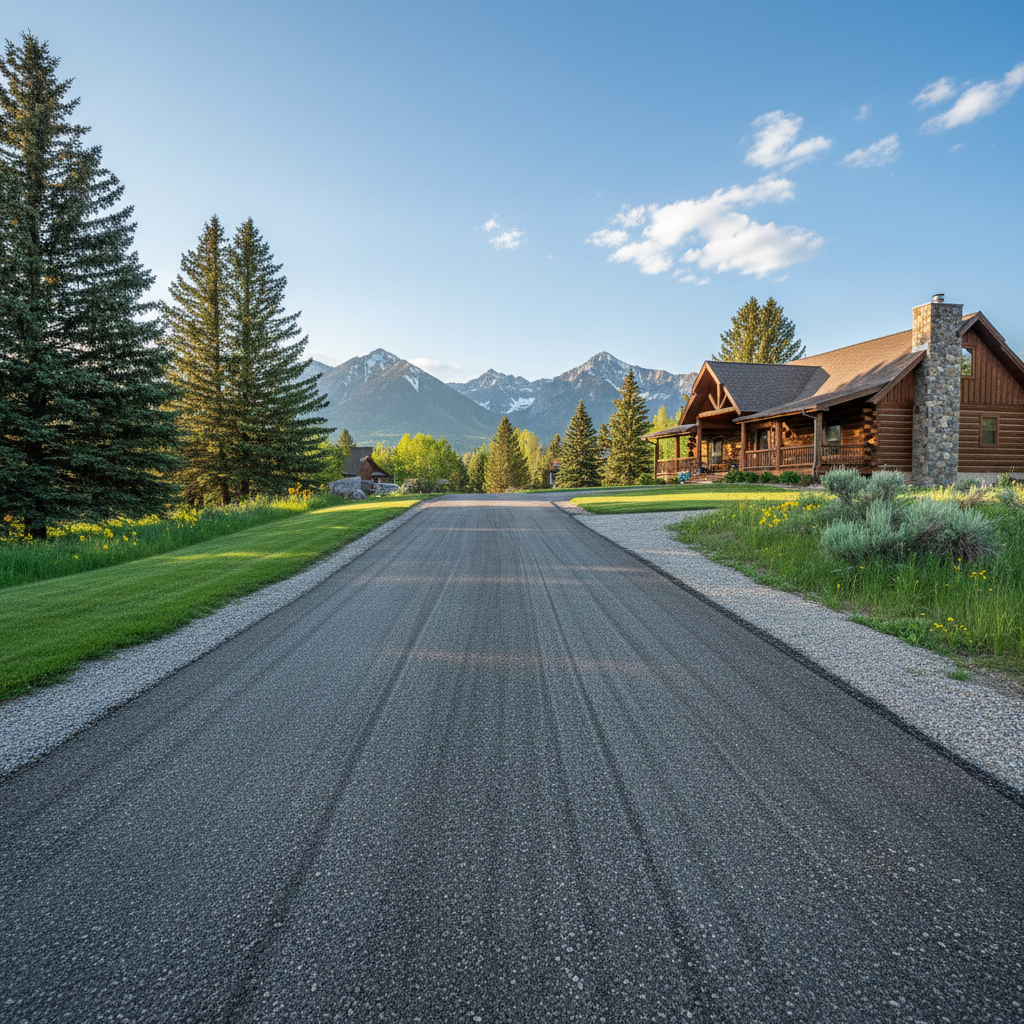
Alright, let's talk about asphalt milling. It's not as flashy as putting down a brand-new driveway, sure, but it's often the smartest thing you can do when your old pavement is shot and you're looking to resurface. Here in Kalispell, we see all sorts of driveways. Some are tucked away in the trees near Whitefish Stage, others are more exposed out towards Somers. What works for one might not be right for another, especially when you're talking about milling.
What Is Asphalt Milling, Anyway?
Think of milling as a giant, super-precise planer for your driveway. Instead of tearing everything out down to the dirt, we use special equipment to grind off the top layer of your existing asphalt. We can go shallow, just taking off the very top, or we can go deeper, removing several inches. The big advantage? It leaves a solid, stable base for a new layer of asphalt. It also means less waste goes to the landfill, and those milled materials often get recycled into new asphalt mixes. It's a pretty green way to do things, actually.
When's the Best Time to Mill in Kalispell?
This is Montana, right? So, timing is everything. You're looking for that sweet spot when the ground isn't frozen solid and we're not battling a foot of snow. Generally, that means late spring, summer, and early fall. We usually start seeing good milling weather around April or May, once the frost is out of the ground and things have dried up a bit. You really don't want to mill when the ground underneath is still saturated from snowmelt; that can mess with the stability of your base.
We can keep milling through the summer and into the fall, often right up until late October or early November, depending on how quickly winter decides to show up. The key is consistent, above-freezing temperatures, both day and night, for a stretch of time. This lets the new asphalt cure properly after we lay it down. If you're thinking about milling, my advice is to get on the schedule early in the season. Good contractors book up fast, and trying to squeeze in a big milling job right before the snow flies can be a real headache – for us, and for you.
Weather Conditions That Matter
So, what kind of weather are we looking for? Pretty simple, really:
- Dry Conditions: Milling creates a lot of dust and debris. If it's pouring rain, it turns into a muddy mess, and it's harder to get a clean, consistent cut. Plus, laying new asphalt on a wet base is a definite no-go.
- Moderate Temperatures: We're not looking for 90-degree heat, but we definitely don't want freezing. The equipment works better, and the material behaves predictably when it's not too hot or too cold.
- No Frost: This is huge. If the ground has frost in it, milling can actually damage the underlying base, leading to problems down the road. We need that ground thawed out completely.
We're always watching the forecast. Sometimes we have to reschedule if an unexpected cold snap or a big rainstorm rolls in. It's just part of working with Mother Nature here in the Flathead Valley, isn't it?
Protecting Your Investment Year-Round
You've gone through the process, you've got a fresh, smooth driveway thanks to milling and new asphalt. Now, how do you make it last? It's not rocket science, but it does take a little common sense:
- Sealcoating: This is your first line of defense. A good sealcoat every 2-3 years protects the asphalt from UV rays, water penetration, and chemicals. Think of it like sunscreen for your driveway.
- Drainage: Make sure water isn't pooling on your driveway. If it is, you've got a problem. Water is asphalt's worst enemy. It seeps into cracks, freezes, expands, and then you've got potholes. If your milling job was done right, it should have addressed any drainage issues, but keep an eye on it.
- Crack Sealing: As soon as you see a crack, get it sealed. Don't wait. A small crack can quickly turn into a big problem when water gets in there and freezes.
- Keep it Clean: Don't let oil spills or gasoline sit on your asphalt. Clean them up quickly. These chemicals break down the binder in the asphalt.
- Avoid Heavy Loads: If you've got a new driveway, try to avoid parking really heavy RVs or equipment on it for extended periods, especially in the first few months. Give it time to fully cure.
Look, milling is a smart, cost-effective way to get a great new driveway surface without the full expense and disruption of a complete tear-out. We do a lot of it here at Coastal Asphalt Solutions, and we've seen firsthand how well it works when it's done right and at the right time. If your driveway is looking tired and you're ready for an upgrade, give us a call. We can come out, take a look, and tell you if milling is the right solution for your place.